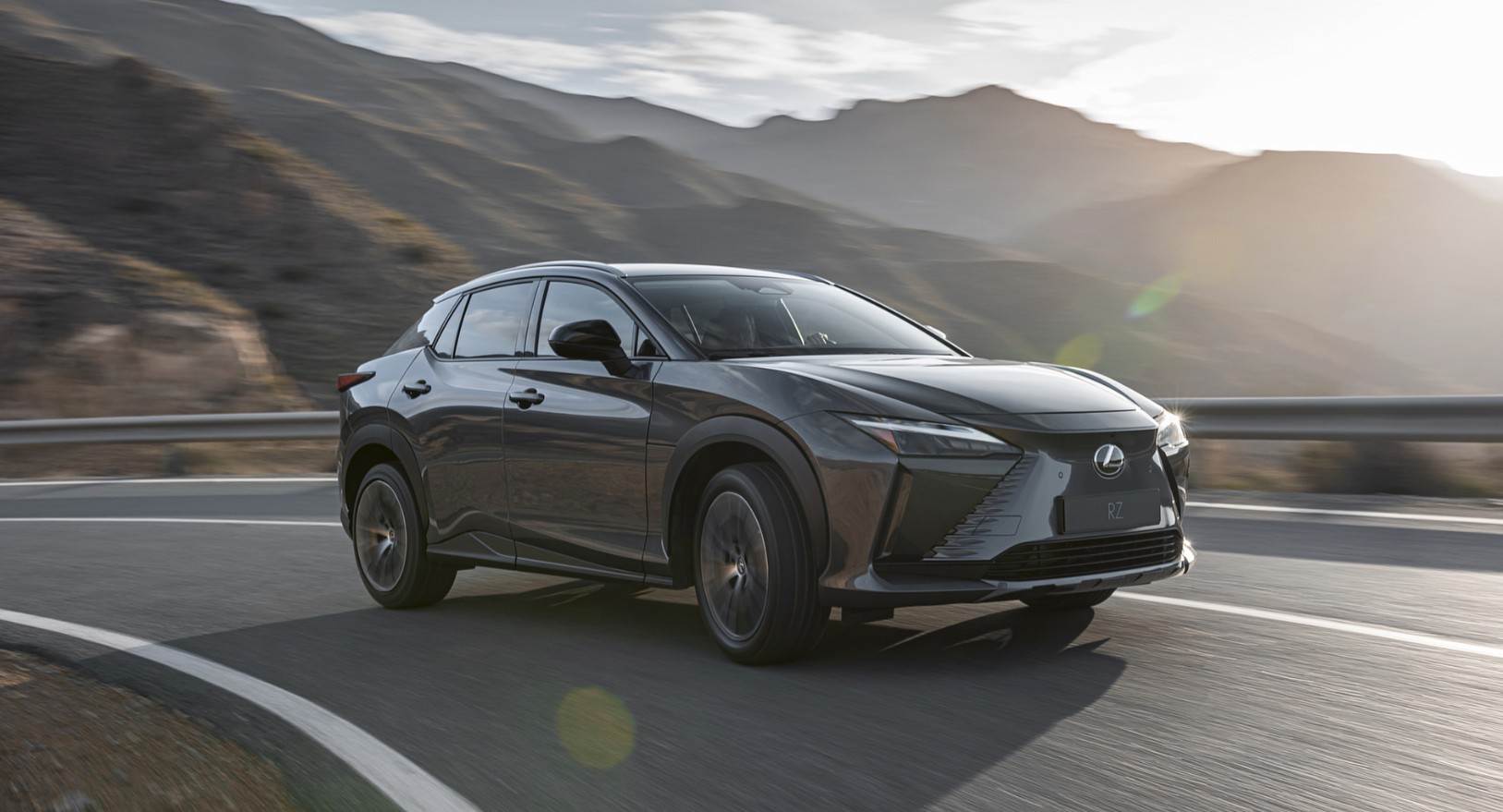
2028 Lexus RZ 450e Review, Price, Dimensions – The 2028 Lexus RZ 450e could become one of the most important chapters in Lexus’s electric-vehicle strategy, but there is an important distinction between the name people are searching for and the model Lexus currently sells. The RZ 450e launched as Lexus’s first dedicated globally available battery-electric vehicle, and the original version established the basic formula: a premium five-seat crossover, dual-motor DIRECT4 all-wheel drive, a quiet luxury-focused cabin and a battery-electric powertrain designed around smooth rather than aggressive performance. Lexus substantially revised the RZ for 2026, increasing output, improving range and charging, adopting a NACS charging port in North America, and expanding the lineup with the 550e F SPORT.
The current U.S.-market RZ 450e produces 308 total system horsepower and uses dual electric motors with DIRECT4 all-wheel drive. With 18-inch wheels, Lexus lists a manufacturer-estimated 264-mile driving range, while the 2026 model gains an 11-kW onboard AC charger and can charge from 10% to 80% in approximately 30 minutes under ideal DC-fast-charging conditions. Those improvements are significant because the original RZ 450e had a considerably shorter range rating and slower charging capability. The 2026 revisions therefore provide the most relevant technical baseline for imagining a potential 2028 version.
However, Lexus has not officially announced a dedicated 2028 RZ 450e with confirmed specifications, pricing or release timing. The situation is particularly interesting because Lexus introduced another substantially updated RZ generation in Japan for the 2026 period, replacing the earlier RZ 450e naming structure with models such as the RZ 500e and RZ 350e, while adding the higher-performance RZ 550e F SPORT. The Japanese specification of that newer RZ also demonstrates how quickly Lexus is developing its BEV technology, including higher-output motors, larger usable performance capability and a newly introduced steer-by-wire system.
For a 2028 model, the most logical expectation is therefore not a simple continuation of the original RZ 450e specification. Lexus could use the name in some markets while updating the underlying vehicle with a more efficient battery, faster charging, improved thermal management, more sophisticated software and a more advanced cockpit. Range could become one of the biggest selling points if Lexus manages to push the RZ 450e toward the 300-mile class while maintaining its luxury ride quality. The objective would be to combine the refinement traditionally associated with Lexus with the convenience and performance expected from a modern premium EV. 2028 Lexus RZ 450e Review
2028 Lexus RZ 450e Redesign and Update Plan
Exterior & Interior
The current RZ has a distinctive fastback-like crossover profile that separates it from conventional boxier luxury SUVs. At roughly 4.8 meters long, 1.895 meters wide and 1.635 meters tall in the Japanese specification, it occupies a useful middle ground between a compact crossover and a larger midsize luxury SUV. The 2,850-mm wheelbase also provides enough room for a five-seat configuration without making the vehicle excessively large for urban environments. A 2028 model could retain these basic proportions while improving airflow around the wheels and underbody to increase efficiency.
Lighting would likely receive a major visual update. Lexus has increasingly used slim daytime running lights, precise LED signatures and illuminated design elements to distinguish its electrified vehicles. The 2028 RZ 450e could adopt thinner headlamps, more integrated daytime running lights and a redesigned rear light bar. The front fascia could become less dependent on the traditional spindle-grille interpretation, replacing it with a more technical “spindle body” approach that uses sculpted surfaces and controlled airflow. New wheel designs could also reduce turbulence, while optional 20-inch wheels would continue to provide a more dramatic appearance for buyers willing to accept some range penalty.
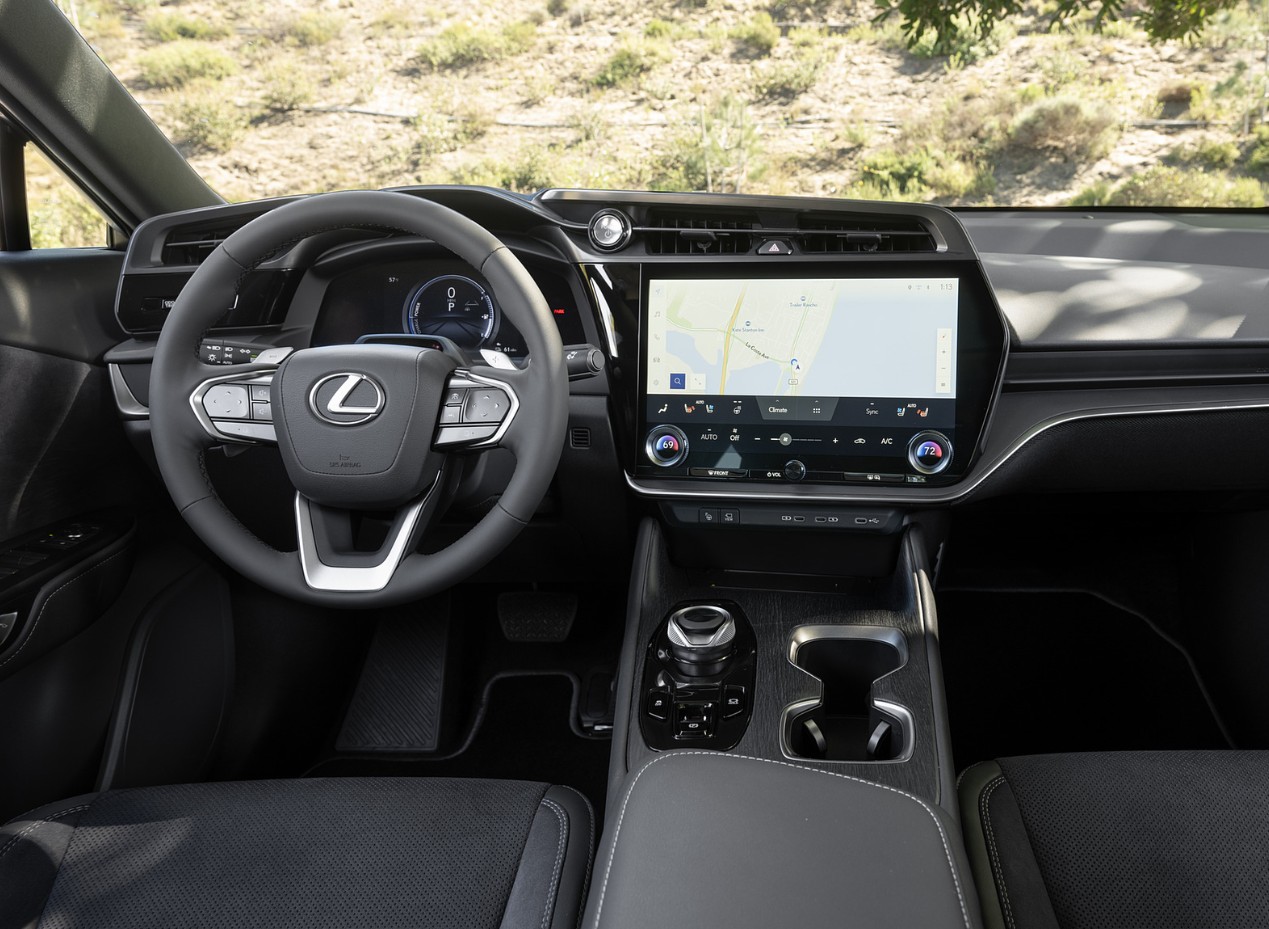
Inside, the RZ already emphasizes a quiet, carefully finished environment rather than an aggressively futuristic cabin. The 2026 U.S. model includes a 14-inch Lexus Interface touchscreen, wireless Apple CarPlay and Android Auto compatibility, heated front seats and a heated steering wheel, while higher trims add features such as a panoramic glass roof, ventilated seats and Mark Levinson audio. The RZ 450e Luxury receives Ultrasuede-trimmed seats and a 13-speaker, 1,800-watt Mark Levinson Premium Surround Sound system.
The 2028 interior could take those strengths further with better materials, more customizable ambient lighting, a larger head-up display and a faster digital interface. Lexus could also improve the physical ergonomics of the cabin by keeping frequently used climate and driving controls accessible without forcing drivers to navigate multiple touchscreen menus. Advanced voice assistance could become more natural, while connected navigation could automatically identify charging stations and calculate battery-aware routes. A premium EV needs more than screens, however. Quietness, seat comfort, steering-wheel quality, tactile switches and excellent visibility will remain important parts of the Lexus experience.
A potential 2028 Lexus RZ 450e would likely need a more substantial technological update than a simple cosmetic facelift. The 2026 RZ already received a redesigned battery-electric system, higher motor output, improved charging capability and a new thermal-management strategy. That means another major update would probably concentrate on software, energy density, packaging and driving efficiency. Lexus could refine the battery chemistry, reduce electrical losses and improve regenerative braking calibration to extract more usable miles without requiring an enormous increase in battery size. Such improvements would be especially valuable because additional battery capacity also increases vehicle weight.
Exterior design could evolve in a more aerodynamic direction. The current RZ already uses a distinctive closed-off front treatment because an EV does not require a conventional engine-cooling grille, but Lexus could reduce aerodynamic drag further with redesigned air curtains, smoother underbody panels, optimized wheels and a more tightly shaped rear section. The roofline would likely remain relatively sleek while retaining enough rear headroom and cargo usability to justify the SUV classification. Slimmer lighting signatures, cleaner surfaces and a more integrated front sensor arrangement could give the 2028 RZ a more mature appearance without abandoning the sharp character introduced by the first generation.
Lexus could also bring more sophisticated chassis technology into the RZ 450e. The newer RZ technology already includes steer-by-wire in Japan on the RZ 550e F SPORT, demonstrating that Lexus is willing to use electronic control systems to change the driving experience. A future RZ 450e could potentially receive an enhanced version of this technology, although it is not confirmed. DIRECT4 could also become more predictive, using navigation, road conditions, steering input and accelerator position to distribute torque between the front and rear motors more efficiently. The result could be stronger corner-exit acceleration while simultaneously reducing unnecessary energy consumption during steady cruising.
Charging is arguably the area where a 2028 RZ 450e would have the greatest opportunity to gain a competitive advantage. The 2026 model already moved to NACS in North America and increased its onboard AC charging capability to 11 kW. Under ideal conditions, DC fast charging from 10% to 80% takes around 30 minutes. By 2028, Lexus could potentially introduce higher peak charging power, improved battery preconditioning and more aggressive thermal management. A target around 15–20 minutes for a typical fast-charge session would make long-distance travel considerably easier, although any such figure remains a projection rather than a Lexus announcement. 2028 Lexus RZ 450e Review
2028 Lexus RZ 450e Specs
Engine & Performance
The current RZ 450e AWD provides an excellent foundation for future development because it uses two electric motors rather than relying on a single front or rear drive unit. The 2026 U.S. version produces 308 total system horsepower, a significant improvement over the earlier model. Lexus also introduced a dealer-installed performance upgrade that raises the RZ 450e to 375 horsepower, increases total output to 280 kW and reduces the claimed 0–60-mph time to 4.3 seconds without affecting the vehicle’s rated range. This upgrade demonstrates that the existing RZ architecture has substantial performance headroom.
A hypothetical 2028 RZ 450e could therefore target a stronger balance between efficiency and acceleration. An output around 330–380 horsepower would be plausible as a projection, particularly if Lexus adopts more powerful eAxles and improved battery discharge capability. Instant electric torque would make the vehicle feel significantly quicker than its power figure suggests. DIRECT4 could also continuously adjust torque distribution between the axles, providing better traction during wet-weather acceleration and allowing the chassis to feel more responsive when cornering. If Lexus eventually adopts steer-by-wire on the 450e, steering response could become more configurable as well.
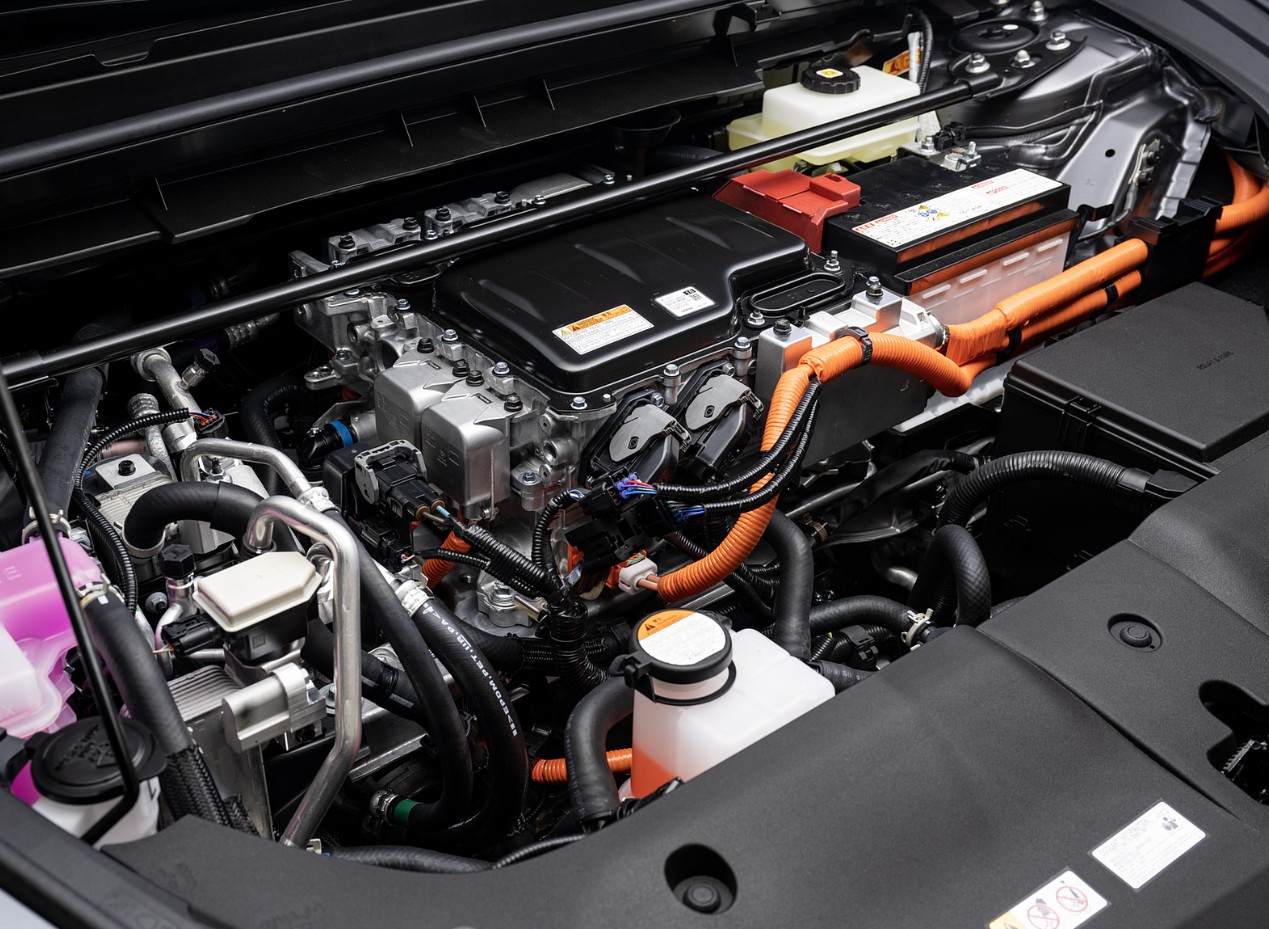
Battery technology will determine how successful such a vehicle becomes. The 2026 RZ uses a higher-capacity lithium-ion battery system that Lexus redesigned to support increased motor output and improved range. The revised system also uses enhanced water cooling for the battery and BEV components to help maintain output. For 2028, improvements in energy density could allow Lexus to increase usable range without dramatically increasing battery mass. A projected 80–90-kWh-class pack would be plausible for a future long-range performance-oriented RZ, although Lexus has not confirmed such a specification.
2028 Lexus RZ 450e Fuel Economy
Fuel economy, or more accurately energy efficiency, will remain a major selling point for the RZ 450e. The current 2026 model has a manufacturer-estimated 264-mile range with 18-inch wheels in the United States, while the front-wheel-drive RZ 350e reaches approximately 301 miles. The difference demonstrates how drivetrain configuration, wheel size and performance affect efficiency. A future RZ 450e could target approximately 280–330 miles if Lexus improves battery density and aerodynamic efficiency. The biggest gains would probably come from software, thermal control, regenerative braking and reduced aerodynamic drag rather than simply adding more battery capacity.
2028 Lexus RZ 450e Safety Features
Safety would also receive continued attention. The current RZ includes Lexus Safety System+ 3.0 as standard across the lineup, bringing a comprehensive collection of collision-avoidance and driver-assistance technologies. A future 2028 version could expand that capability with better pedestrian and cyclist recognition, improved intersection assistance, enhanced lane-centering, blind-spot intervention, rear cross-traffic protection and more sophisticated driver monitoring. Parking assistance could also become more automated, particularly as premium EVs increasingly use cameras and sensors to make maneuvering in crowded urban environments easier. The ideal system would remain smooth and predictable rather than constantly interrupting the driver’s control.
2028 Lexus RZ 450e Release Date & Price
The release date is equally uncertain. Lexus has not announced a specific 2028 RZ 450e launch date, and the model’s naming structure may change as the newer RZ lineup expands. Japan’s updated RZ already uses RZ 350e, RZ 500e and RZ 550e naming, with the RZ 550e F SPORT reaching approximately 408 PS and the RZ 350e offering substantially greater range in Japanese WLTC testing. That means the North American RZ 450e name could eventually disappear in favor of a revised global naming strategy.
If Lexus keeps the 450e name in North America, a 2028 version could arrive during late 2027 or sometime in calendar 2028, depending on the product cycle. A reveal several months before showroom arrival would be normal for a significant update. The more likely scenario is an evolution of the 2026 platform rather than an entirely unrelated vehicle, especially because Lexus has already invested heavily in improving the RZ’s battery, charging hardware, electric motors and chassis technology. Until Lexus publishes official 2028 information, the safest expectation is an advanced evolution rather than a confirmed all-new RZ 450e.
The current U.S. RZ lineup provides a useful template for a future 2028 range. Lexus currently offers the RZ 450e in standard, Premium and Luxury forms, alongside the RZ 350e and higher-performance RZ 550e F SPORT. The 2026 RZ 450e starts at $50,895, while the 450e Premium starts at $53,095 and the 450e Luxury at $58,395, according to Lexus’s current pricing. The RZ 550e F SPORT also starts at $58,395, making the range unusually broad for a single electric crossover family.
For 2028, Lexus could simplify the range around three core 450e grades: a well-equipped base model, Premium and Luxury. The entry version would likely prioritize range and value, while Premium could add the panoramic roof, ventilated seats, upgraded convenience equipment and additional technology. Luxury would remain the flagship 450e specification, using higher-grade upholstery, Mark Levinson audio, enhanced ambient lighting and additional driver-assistance features. The F SPORT badge could remain reserved for a higher-output model rather than becoming merely an appearance package. That strategy would give buyers a clear reason to move upward through the lineup.
Pricing is difficult to predict because Lexus has not announced a 2028 RZ 450e. If the current vehicle remains competitive, an inflation-adjusted starting price in the approximate $53,000–$56,000 range would be reasonable as a projection, while Premium could fall around $56,000–$60,000 and Luxury around $61,000–$67,000 before destination and options. A high-performance F SPORT model could move beyond $65,000. These figures are estimates, not official Lexus pricing. The final MSRP would depend heavily on battery technology, standard equipment, production costs, tariffs, market conditions and whether Lexus introduces the RZ 450e as a substantially redesigned vehicle. 2028 Lexus RZ 450e Review
Conclusion
The 2028 Lexus RZ 450e could become a much stronger electric luxury crossover if Lexus continues the development path established by the latest RZ. The 2026 model has already addressed several weaknesses of the original vehicle with greater power, longer range, faster charging, NACS compatibility in North America and a broader performance lineup. That makes the next stage less about proving that Lexus can build an electric SUV and more about refining efficiency, charging convenience, software and driving dynamics.
A future RZ 450e with roughly 300 miles of usable real-world capability, faster DC charging, sophisticated DIRECT4 torque control and more advanced driver assistance would be substantially more competitive against premium electric crossovers. The addition of newer battery technology could also allow Lexus to improve acceleration without sacrificing range, while improved thermal management could make performance more repeatable during demanding driving.
The interior should remain another major advantage. Lexus has a clear opportunity to combine high-quality materials, excellent seats, low cabin noise and intuitive technology instead of simply competing on screen size. A larger digital interface, smarter voice controls, premium audio and more advanced connected services would complement the traditional Lexus emphasis on comfort. The RZ should feel expensive because of its craftsmanship and refinement, not merely because of its technology list.
For buyers considering the RZ 450e as a 2028 purchase, the most important details remain unconfirmed: final power, battery capacity, range, pricing and release timing have not been announced. Nevertheless, the technical direction is encouraging. The latest RZ already demonstrates that Lexus is willing to substantially revise its electric architecture, and the brand’s newer Japanese RZ models show that even more ambitious developments are possible. If that pace continues, the 2028 Lexus RZ 450e could finally combine the quiet sophistication expected from a Lexus with the range, charging speed and performance demanded by the next generation of luxury-EV buyers.